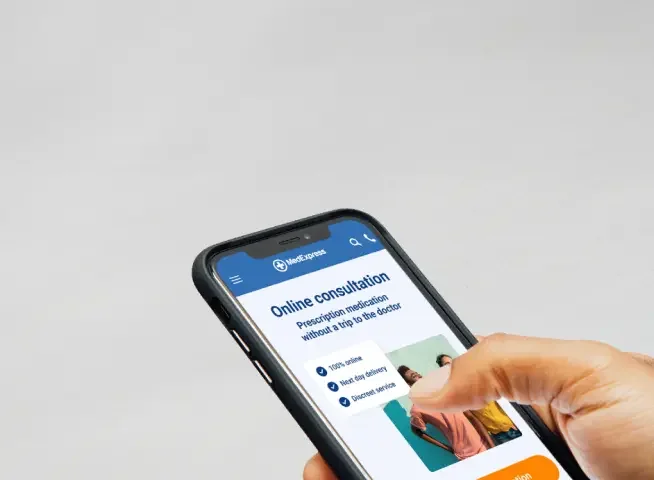
Company: HeliosX * Role: Senior product designer * Product: E-commerce
HeliosX operates at the intersection of healthcare and technology, providing digital access to treatments through a regulated, end-to-end platform. As part of the product and growth team, I worked on improving key journeys such as consultation and checkout, where user trust, clarity, and motivation directly impact conversion and long-term value.
Despite strong demand, the experience presented friction at critical moments. Users dropped off during consultation due to complexity and uncertainty, while checkout flows introduced hesitation despite clear intent. The challenge was to optimise these journeys in a highly regulated environment, balancing compliance with usability to improve activation and conversion.

Consultation Experience Optimisation
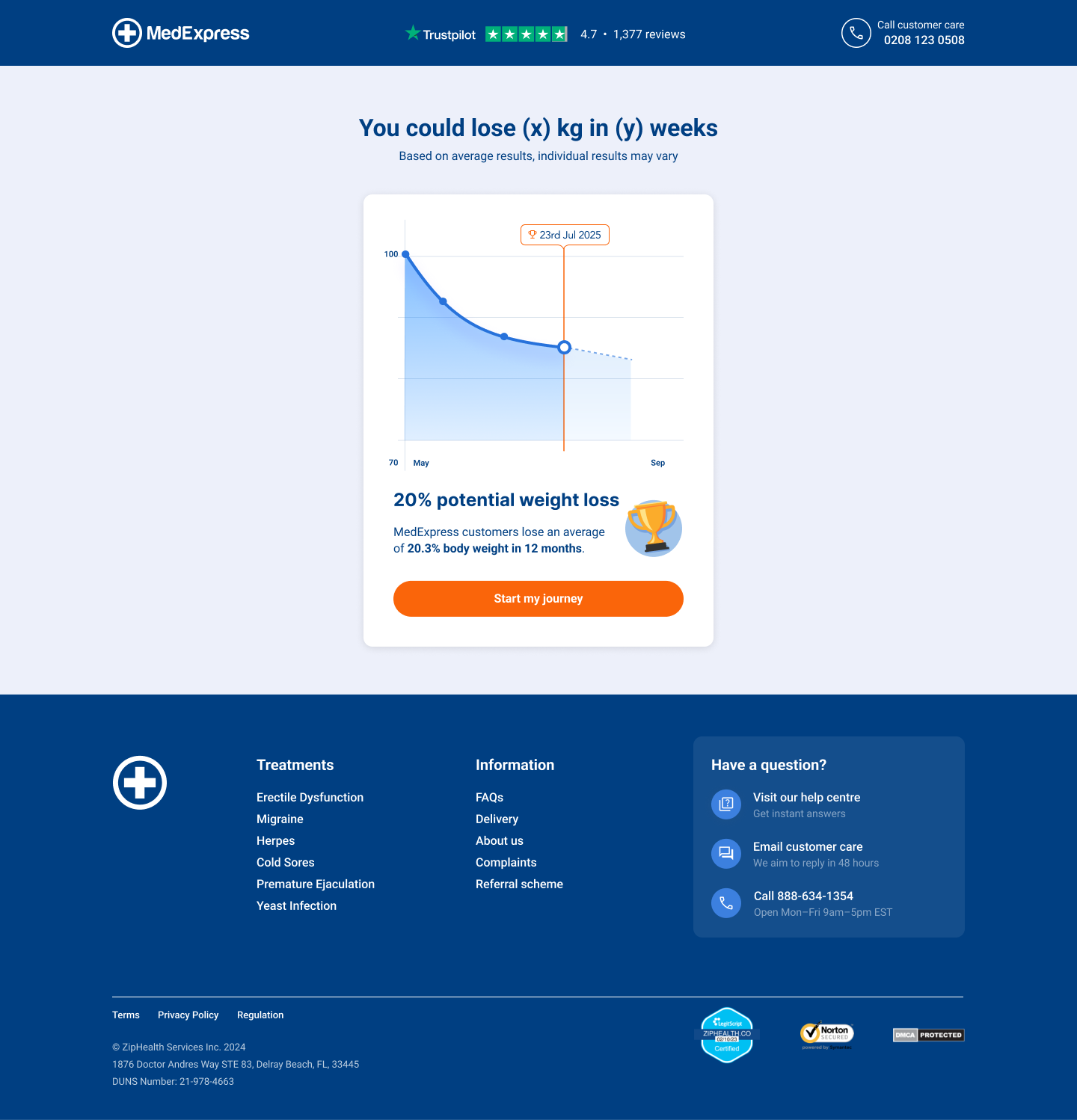
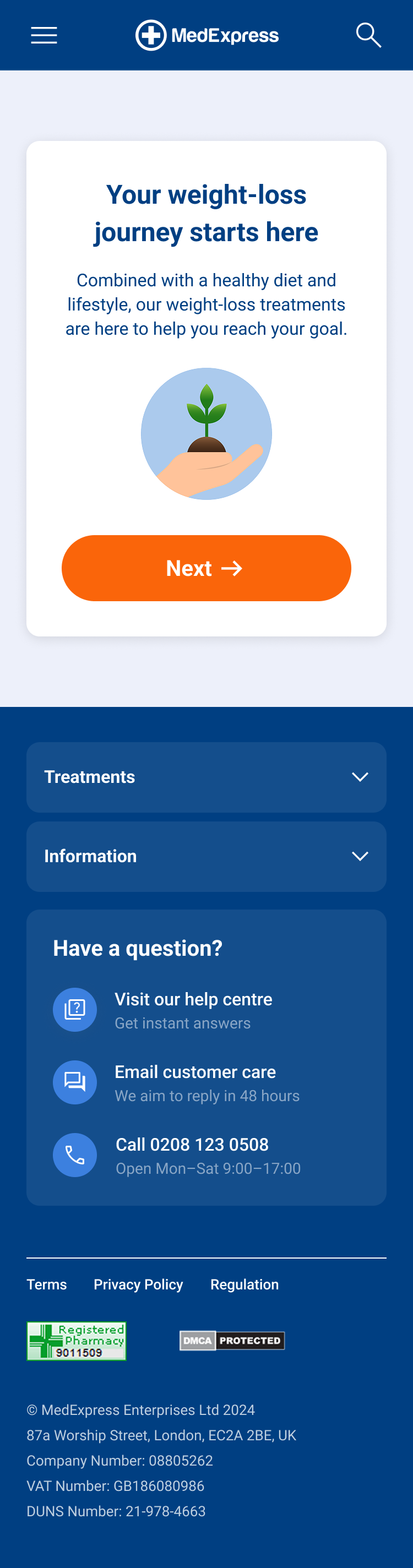
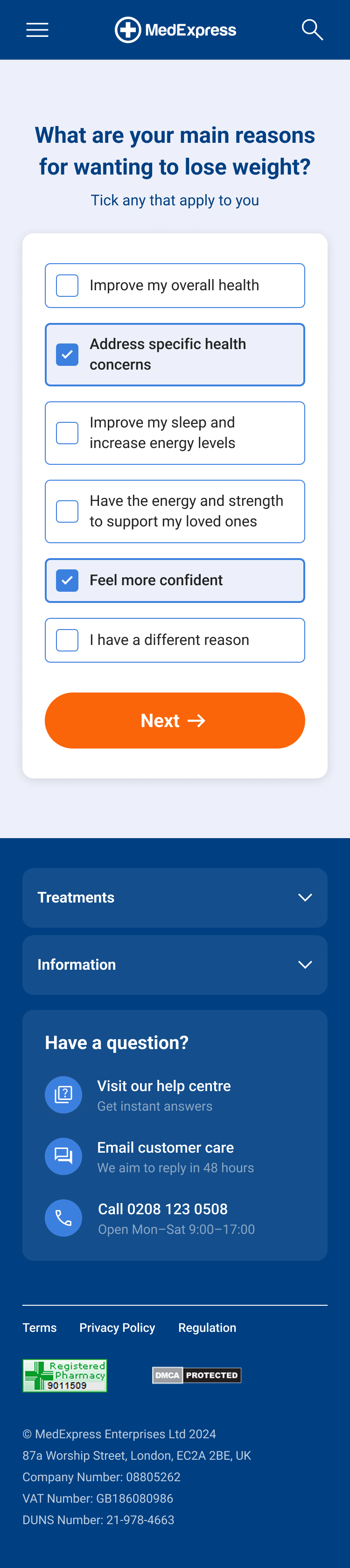
The consultation is the defining gateway of the MedExpress journey — it’s where users decide whether to trust a digital health service and take the first step toward treatment. Supported by researchers, I ran qualitative interview sessions with users who initiated but did not complete the consultation, uncovering concerns about clinical questions and perceived risk. A key finding was that hesitation was not driven by lack of intent, but by lack of clarity and confidence—particularly in clinically sensitive moments. Moreover, while operating within the growth squad, I led multiple projects aimed at testing the value of new initiatives aimed at building trust and clarity.
Based on this, I defined a strategy focused on reducing cognitive load, increasing perceived progress, and reinforcing trust throughout the journey. The consultation experience was restructured to guide users through a more intuitive, step-based flow, improving comprehension and maintaining momentum. Content and interaction patterns were refined to feel more human and supportive, helping users understand both what was being asked and why.
Checkout Experience Redesign
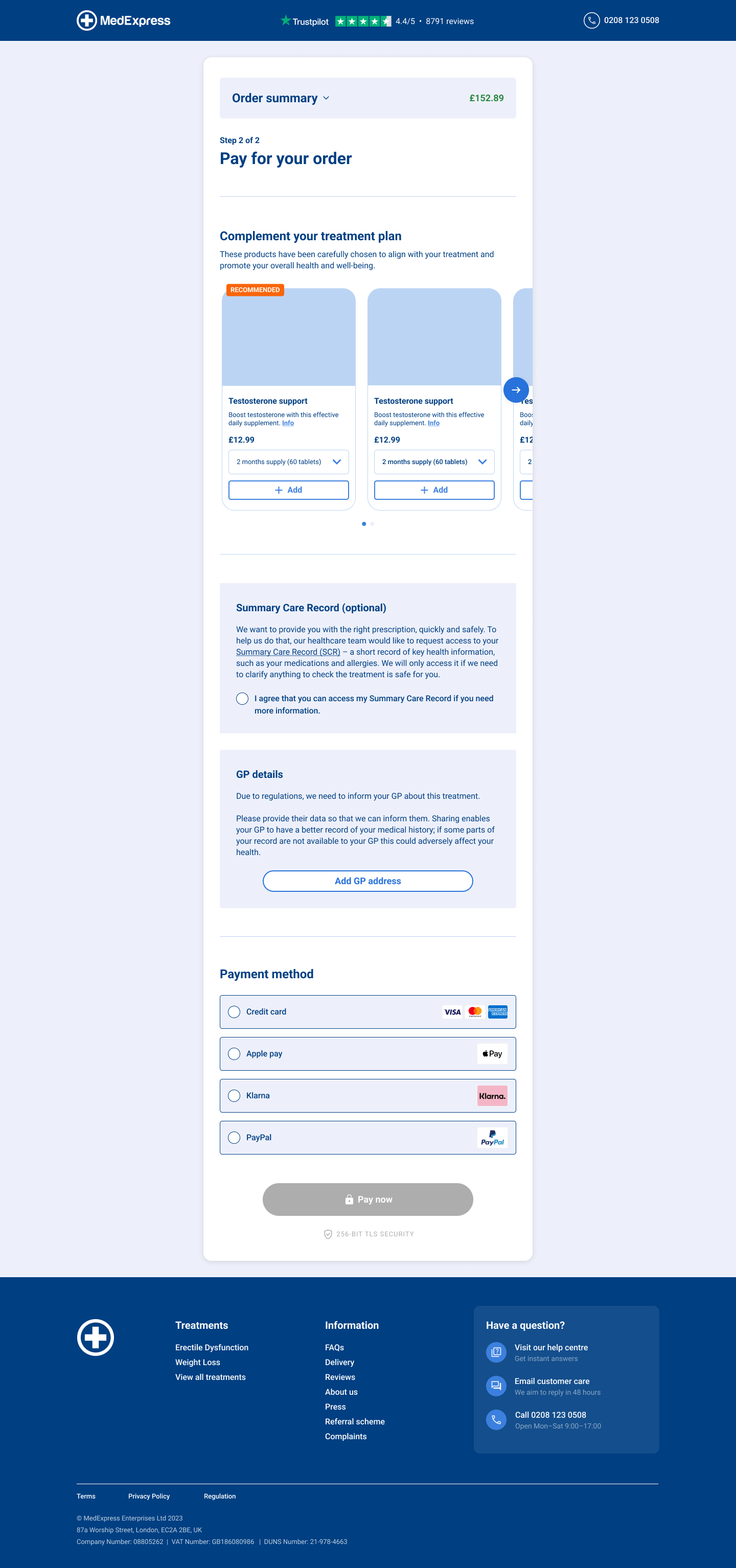
In parallel, I redesigned the checkout experience to reduce friction and increase confidence. This included simplifying the flow, improving hierarchy, and surfacing key information (such as delivery and privacy assurances) at the right moments.
Integrating these insights, I crafted a strategy centred on clarity, empathy and confidence, meaningfully reducing friction and increasing willingness to complete. My goals were to simplify decision points, increase trust signals, and reduce anxiety around payment (especially for first-time pharmacy customers).
These changes were continuously tested and iterated in close collaboration with product, engineering, and analytics teams, ensuring decisions were grounded in real user behaviour.
Impact & reflection
The improvements delivered a measurable business impact. Checkout optimisation resulted in a 2.2% increase in conversion rate, while ongoing testing and iteration contributed to stronger engagement and retention across key journeys. More broadly, these changes helped drive approximately £580K in annualised customer profitability, demonstrating the direct link between UX and commercial performance.
This work reinforced the importance of designing for behaviour, not just usability, particularly healthcare. By focusing on clarity, trust, and motivation, I was able to improve both user outcomes and business metrics while operating within complex regulatory constraints.